GeeFi Presale Guide: What Is $GEE and How to Participate in Its Multichain DeFi Launch
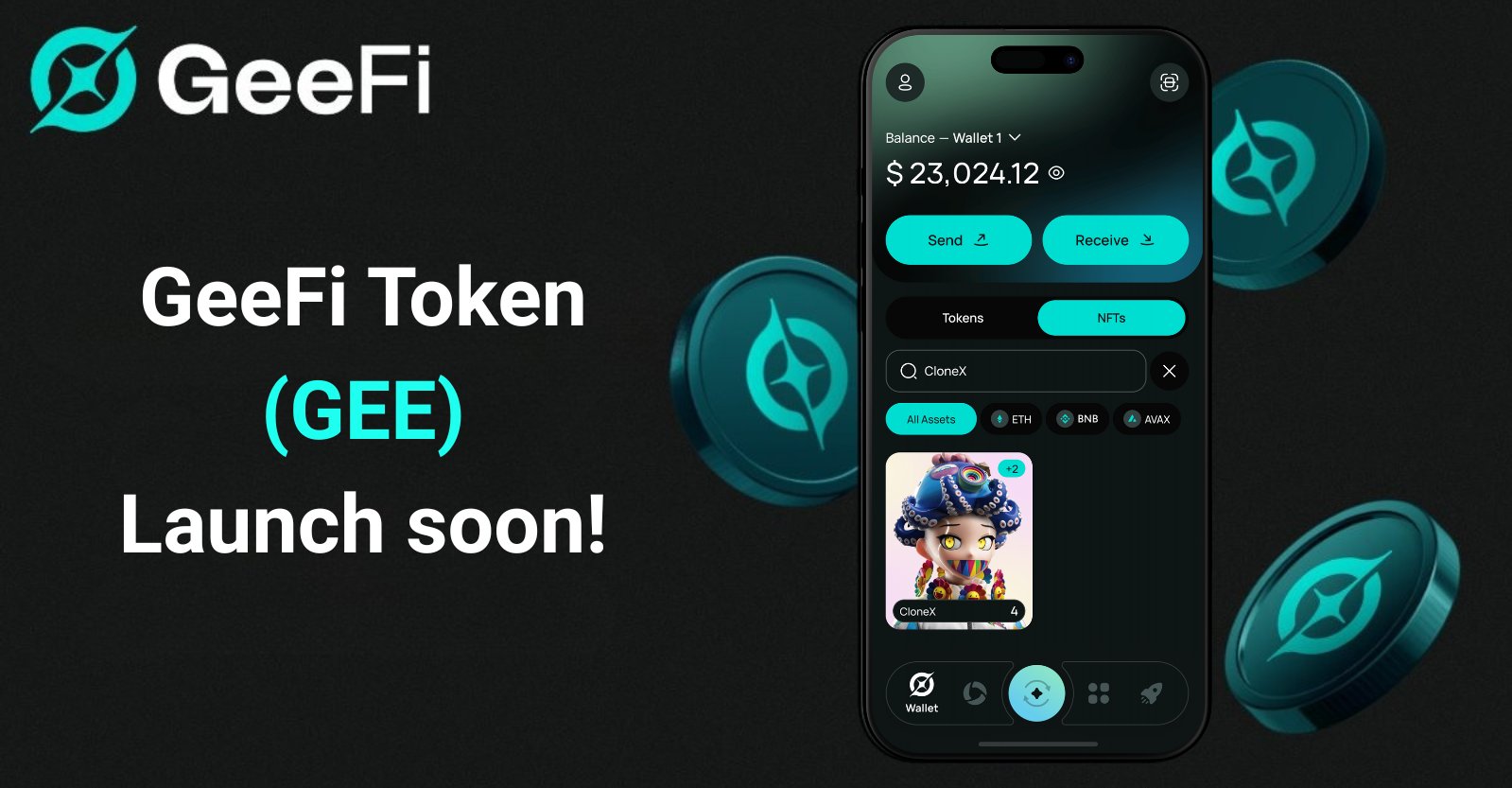
GeeFi (GEE) presale is more than just a fundraising round. GeeFi launched with a clear vision: to become an all-in-one decentralized hub where you can securely manage tokens, NFTs, and trade across multiple blockchains. Behind the project is a growing community and state-of-the-art self-custody wallet technology, promising a seamless DeFi experience.
So, what’s so special about participating in this presale? You’ll have the opportunity to own GEE tokens before they go live, giving you a head start in a volatile market. Of course, with potential comes undeniable risks.
This article will be your complete guide to understanding the GeeFi presale: how it works, what it means for the ecosystem, and most importantly – the specific steps for you to participate wisely, whether you’re a newbie or a seasoned investor. Let’s explore.
Key Takeaways
- GeeFi (GEE) is an ERC-20 utility token that underpins the GeeFi ecosystem, which includes a multichain non-custodial wallet, GeeFi HUB portfolio dashboard, and GeeFi DEX for on-chain trading and liquidity.
- The GEE presale launched in November 2025, selling over 5.3 million tokens on day one and completing its 10 million-token Phase 1 at $0.05 per GEE, before moving into Phase 2 with a 20% price increase to $0.06.
- GeeFi promotes high staking yields (up to ~55% APR in some promotional materials) and a future role for GEE in fee discounts, rewards, and card benefits.
A Deep Dive into GeeFi: What Is $GEE?
GeeFi (GEE) is an ERC-20 token on Ethereum that serves as the native asset of the GeeFi ecosystem—a suite of tools that includes a multichain wallet, DEX, portfolio hub, and future payment-style products such as a crypto card.
The project embodies several core values that are reflected in its design:
- Self-custody and sovereignty – GeeFi Wallet is non-custodial, meaning users hold their own private keys and funds rather than relying on a centralized custodian.
- Multichain accessibility – The wallet and HUB are built to support multiple major networks (such as Ethereum, BNB Chain, Solana, Tron, and others), making GEE a bridge asset within a wider DeFi landscape.
- Yield-driven participation – Through staking, fee discounts, and ecosystem incentives, GEE is designed to reward active users and long-term holders.
By combining a live multichain wallet with a dedicated token, GeeFi (GEE) attempts to move beyond a purely speculative meme-style coin and position itself as a functional asset for DeFi users, traders, and on-chain portfolio managers who want everything under one roof.
Source: GreeFi on X
GeeFi Sells 5.3M GEE in 24 Hours, Phase 2 Price Jumps 20%
In late November 2025, GeeFi announced that its Phase 1 presale had sold over 5.3 million GEE within the first 24 hours, eventually clearing the full 10 million GEE allocation in just 1–2 weeks at an initial price of $0.05 per token. This rapid sell-through triggered an automatic 20% price increase for Phase 2, raising the token cost to $0.06 and intensifying community attention. Alongside plans for a $0.40 listing price and the project’s heavily promoted high-yield GEE staking, the presale has sparked both excitement and critical debate across DeFi circles—drawing in opportunity-seekers while prompting others to question the sustainability of its early-stage hype.
GeeFi Presale Guide: How to Join the $GEE Presale?
GeeFi (GEE) is currently hosting its official token presale, offering early supporters a chance to secure GEE at discounted presale prices before any future public exchange listing. According to project press releases, Phase 1 launched in November 2025 and quickly sold out its 10 million GEE allocation, raising around $500,000. The sale has since moved to Phase 2, with a higher price point and ongoing fundraising.
At the time of writing, the key presale parameters can be summarized as:
- Start Date: November 2025 (Phase 1 launch)
- End Date: Ongoing (Phase 2 currently active; later phases planned)
- Token Price: From $0.05 (Phase 1), increased to $0.06 (Phase 2)
- Accepted Currencies: As specified on the official GeeFi presale page
- Minimum Investment: Not clearly stated in public press materials (check presale UI)
- Wallet Cap: Not clearly stated in public press materials (check presale UI)
- Vesting: Team materials mention vesting allocations (e.g., 2–4 years for team/advisors), but contributors should refer to the official tokenomics and vesting schedule before investing
To join the GeeFi (GEE) presale, users need to:
- Visit the project’s official presale site (typically via the GeeFi website or the hub.geefi.io presale portal).
- Connect a compatible Web3 wallet. While GeeFi highlights its own wallet, users may also choose other non-custodial wallets that support Ethereum.
- Follow the on-screen instructions to contribute with the accepted currencies listed on the presale page and confirm the transaction on-chain.
- Wait for token distribution according to the official vesting or release schedule once the presale phase concludes.
This presale offers strategic exposure to a project positioning itself as a multichain wallet + DEX + DeFi hub, a sector that has drawn considerable attention in 2024–2025 as more users move from centralized exchanges to self-custodial, all-in-one DeFi interfaces. However, investors should remember that presale tokens are highly speculative, and performance will heavily depend on GeeFi’s ability to grow real usage for its wallet, HUB, and DEX.
How Does Bitget Wallet Help You Join a Crypto Presale Safely?
Bitget Wallet serves as a powerful gateway for presale participation—not by hosting presales itself, but by enabling seamless interaction with third-party platforms. Through its built-in DApp browser, users can directly access presale pages on sites like PinkSale, Pump.fun, or Solanium without leaving the app. With full support for Ethereum, BNB Chain, Solana, and other networks, Bitget Wallet allows users to securely connect, sign whitelist verifications, and claim airdropped tokens when eligible.
📌 Please note: Bitget Wallet does not offer fiat payment methods for presales and does not endorse or vet any presale projects. Users should always perform their own due diligence before participating.
GeeFi (GEE) Price Prediction for 2025: What to Expect?
Factors such as market conditions, project fundamentals, and community trust shape cryptocurrency valuations. With substantial momentum from its presale phases and a strong narrative around multichain utility, GeeFi (GEE) is anticipated to remain in a speculative early-growth range during 2025, with projections suggesting it could approach the $2–$3 region under favorable conditions. If adoption within the DeFi wallet and staking ecosystem accelerates, its long-term value may rise toward these upper targets.
Key Drivers of GeeFi (GEE) Price Movement
Several factors shape the potential value of GeeFi (GEE):
-
Market Dynamics
Early-stage tokens are heavily influenced by capital inflows, investor sentiment, and presale performance. GeeFi’s rapid sell-through during initial phases indicates strong speculative interest, which may support upward momentum if overall market conditions remain bullish.
-
Adoption & Practical Use Cases
GEE’s value is tied to real usage within the GeeFi ecosystem—such as its wallet, DEX functions, staking rewards, and future card utilities. The more these features attract active users, the stronger the foundation for long-term valuation.
-
Technological Development & Expansion
Continuous rollout of multichain support, staking systems, liquidity pools, and upcoming product features may reinforce confidence and drive demand for GEE as a utility token. Growth in these areas is essential for sustaining long-term price appreciation.
Future Growth Prospects
If GeeFi (GEE) maintains its expansion within the multichain DeFi infrastructure space, rising user participation and ecosystem adoption could push its valuation higher. Expert projections suggest that steady development and broadened integration may elevate its price toward the $2–$3 range, though investors should remain aware of market volatility, token unlock schedules, and the inherent risks of early-stage assets.
Source: Cryptopolitan.com
GeeFi (GEE) Key Innovations: Top Reasons to Watch
The standout features of GeeFi (GEE) include:
- Multichain Non-Custodial Wallet + HUB in One Ecosystem
- GeeFi’s core product is a non-custodial wallet connected to a GeeFi HUB that aggregates balances, portfolio performance, and positions across multiple blockchains.
- Instead of juggling different wallets and explorers, users can monitor tokens, NFTs, and DeFi positions from a single interface, while still controlling their private keys.
- Built-In DEX Functionality and Liquidity Incentives
- The GeeFi DEX is integrated directly into the wallet/HUB, enabling swaps, liquidity provision, and access to on-chain markets without leaving the app.
- GEE is positioned as a utility and incentive token within this DEX environment, with parts of the presale funding allocated to liquidity pools and rewards to encourage on-chain trading activity.
- Staking and Deflationary Token Design
- GeeFi promotes GEE staking with attractive APRs (promotional materials cite up to ~55% APR for long-term locks) and describes GEE as a deflationary token, meaning token supply in circulation is intended to decrease over time through its tokenomics.
- Combined with potential fee discounts and future use in the GeeFi crypto card, this creates multiple “hooks” for users who actively engage with the ecosystem—though also amplifies expectations and risk.
Understanding GeeFi (GEE): The Technology Behind It
GeeFi is positioned as a decentralized DeFi and wallet ecosystem that brings together:
- Ethereum-based token logic (GEE as an ERC-20)
- Multichain wallet infrastructure (supporting several L1/L2 networks)
- Smart contracts for staking, rewards, and DEX activity
By leveraging blockchain technology, the GeeFi ecosystem enables interactions such as on-chain swaps, staking, and future governance or reward mechanisms. At a high level, the flow works as follows:
| Step | Process | Benefit |
| 1. Blockchain Integration | GeeFi issues GEE as an ERC-20 token on Ethereum, and connects its wallet/HUB to multiple chains via RPC and smart-contract integrations. | Users can manage assets from several networks within one non-custodial interface. |
| 2. Token Transactions | Users will be able to buy, sell, and use $GEE within the GeeFi ecosystem for activities like trading on the GeeFi DEX or accessing certain perks. | GEE becomes a functional asset rather than a purely speculative token. |
| 3. Smart Contracts | Smart contracts handle staking, reward distribution, and future DeFi processes linked to GEE. | Automated and transparent reward logic without centralized intermediaries. |
| 4. Governance Participation | The project hints at longer-term governance roles for token holders as the ecosystem matures (e.g., decisions around liquidity or product priorities). | Community members can influence key parameters instead of relying solely on a centralized team. |
| 5. Staking & Yield Mechanisms | Users can stake GEE (and in some cases other assets) to earn yield, with marketing highlighting high APR opportunities for long-term locks. | Encourages long-term participation and potentially stabilizes token supply if adoption grows. |
Who Leads GeeFi (GEE) - Team & Key Partnerships
The Team Behind GeeFi
GeeFi is associated with GeeFi Tech LLC, a company that, according to press releases, is registered in Kingstown, Saint Vincent and the Grenadines. Public materials emphasize:
- A focus on building a global DeFi infrastructure product (wallet + DEX + HUB + card).
- A multi-year vesting schedule (2–4 years) for team and advisor allocations, intended to align the core contributors with the long-term growth of the ecosystem.
Key Ecosystem Relationships
Rather than advertising a large list of named “blue-chip” partners, GeeFi’s messaging focuses on:
- Integrations with multiple blockchains (Ethereum and other major networks) through its multichain wallet stack.
- Plans to deploy liquidity on DEXes and support for staking pools, which inherently involve collaboration with infrastructure providers and liquidity partners.
- A roadmap that includes a GeeFi crypto card, implying future cooperation with payment processors or card-issuing partners—although concrete names have not been widely disclosed yet.
Because partnership details are still emerging, it is important not to overestimate institutional backing based solely on presale marketing copy.
The Role of GeeFi (GEE) in DeFi: Use Cases Explained
1. Key Use Cases of GeeFi (GEE)
GeeFi (GEE) serves several roles within the project’s ecosystem:
- Ecosystem Utility Token – GEE is meant to be used across GeeFi’s wallet, HUB, and DEX for access to features and potential fee discounts.
- Staking and Rewards Asset – Holders can stake GEE to earn yield, with promotional APRs positioned as a core attraction of the presale era.
- Liquidity and Incentive Layer – Portions of GEE are reserved for liquidity pools and reward programs, encouraging traders and LPs to use the GeeFi DEX.
- Future Payment & Card Perks – As GeeFi works on its crypto card concept, GEE is expected to play a role in providing cashback-style rewards or fee reductions for card users within that ecosystem.
These applications highlight the practical value of $GEE within the multichain DeFi wallet and trading niche, assuming GeeFi successfully brings users into its wallet, HUB, and DEX and continues building out real on-chain activity.
2. How GeeFi (GEE) Is Transforming the DeFi Wallet Landscape
GeeFi aims to transform the DeFi wallet experience by:
- Combining wallet, DEX, and analytics into a single non-custodial app, so users can move from “holding” to “trading and staking” without changing interfaces.
- Providing a token-driven incentives layer (GEE) that rewards active usage instead of just storing assets passively.
- Targeting a future where multichain, self-custodial management is the default, and centralized exchanges function more as fiat ramps than as core crypto hubs.
If GeeFi can deliver on its roadmap and maintain security, usability, and transparency, GEE could become a meaningful utility asset within its own ecosystem. Still, given the early stage and presale-driven marketing, its long-term success will depend on actual product adoption, not just presale hype.
GeeFi (GEE) Roadmap Explained: What’s Coming Next?
The roadmap for GeeFi (GEE) outlines a clear path for growth and ecosystem expansion, moving from its wallet launch phase into a full-stack multichain DeFi infrastructure.
| Quarter | Roadmap |
| Q3 2025 | • Continued optimization of the GeeFi Wallet following the official launch. • Expansion of global marketing and community onboarding efforts. • Ongoing improvements to multichain performance, user experience, and asset support. • Preparations for major 2026 product releases, including deeper DEX and card integrations. |
| Q4 2025 | • Enhanced off-ramp features allowing more seamless crypto-to-fiat conversions. • Introduction of new user support systems and post-launch refinement updates. • Scaling infrastructure to accommodate larger user traffic. • Strengthening ecosystem partnerships and integration groundwork for 2026 expansions. |
| Q1 2026 | • Listing the GeeFi Token (GEE) on decentralized and centralized exchanges. • Beginning integration of the proprietary GeeFi DEX directly inside the wallet. • Development of GeeFi Crypto Cards for real-world spending. • Adding support for new networks such as Lightning Network (BTC) and Monero. • Increasing the number of stakable assets and conducting ecosystem-wide user surveys. • Integrating TON Connect and delivering major performance optimizations. |
| Q2 2026 | • Official launch of the in-app GeeFi DEX, enabling direct token swaps with no intermediaries. • Release of the GeeFi Crypto Cards to broaden payment capabilities. • Adding more supported networks and forming new blockchain partnerships. • Improving UI/UX for better accessibility and visual clarity. • Expanding staking options and enhancing liquidity-focused features. |
These developments highlight the practical value of $GEE within the multichain DeFi and crypto-wallet ecosystem, reinforcing its role in trading, staking, payments, and long-term community growth.
How to Buy GeeFi (GEE) on Bitget Wallet?
Buying GeeFi (GEE) on Bitget Wallet is easy! Just follow these simple steps:
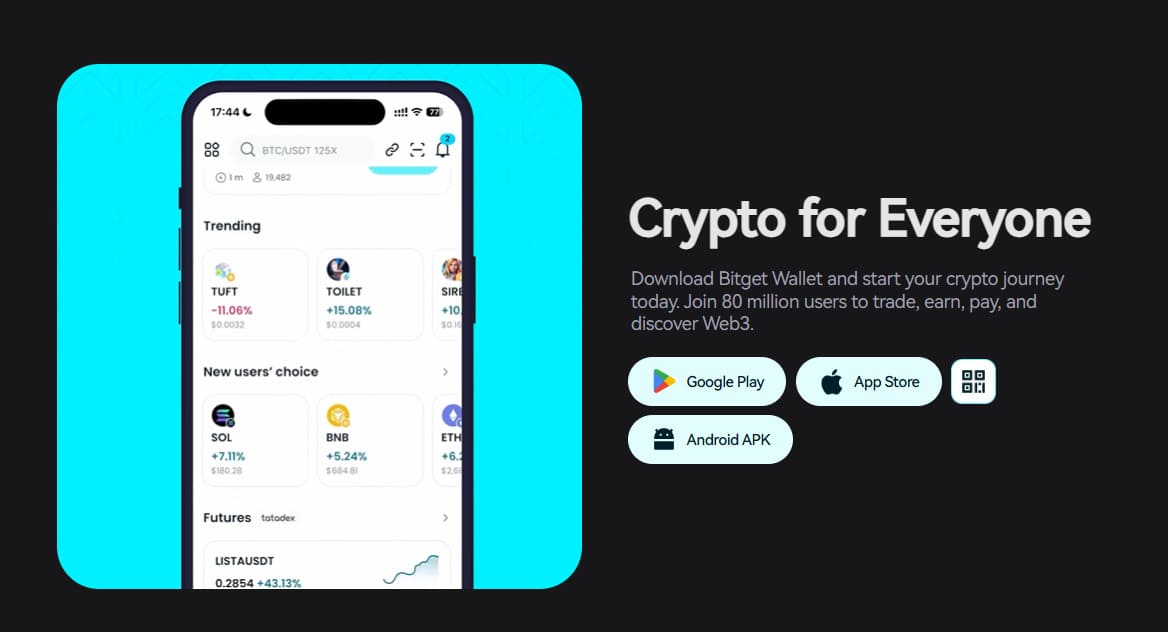
Step 1: Create a wallet
- If you don't have a wallet, download Bitget Wallet app now.
- Register with your phone number or email, verify quickly and you can use it right away.
Step 2: Deposit money into your wallet
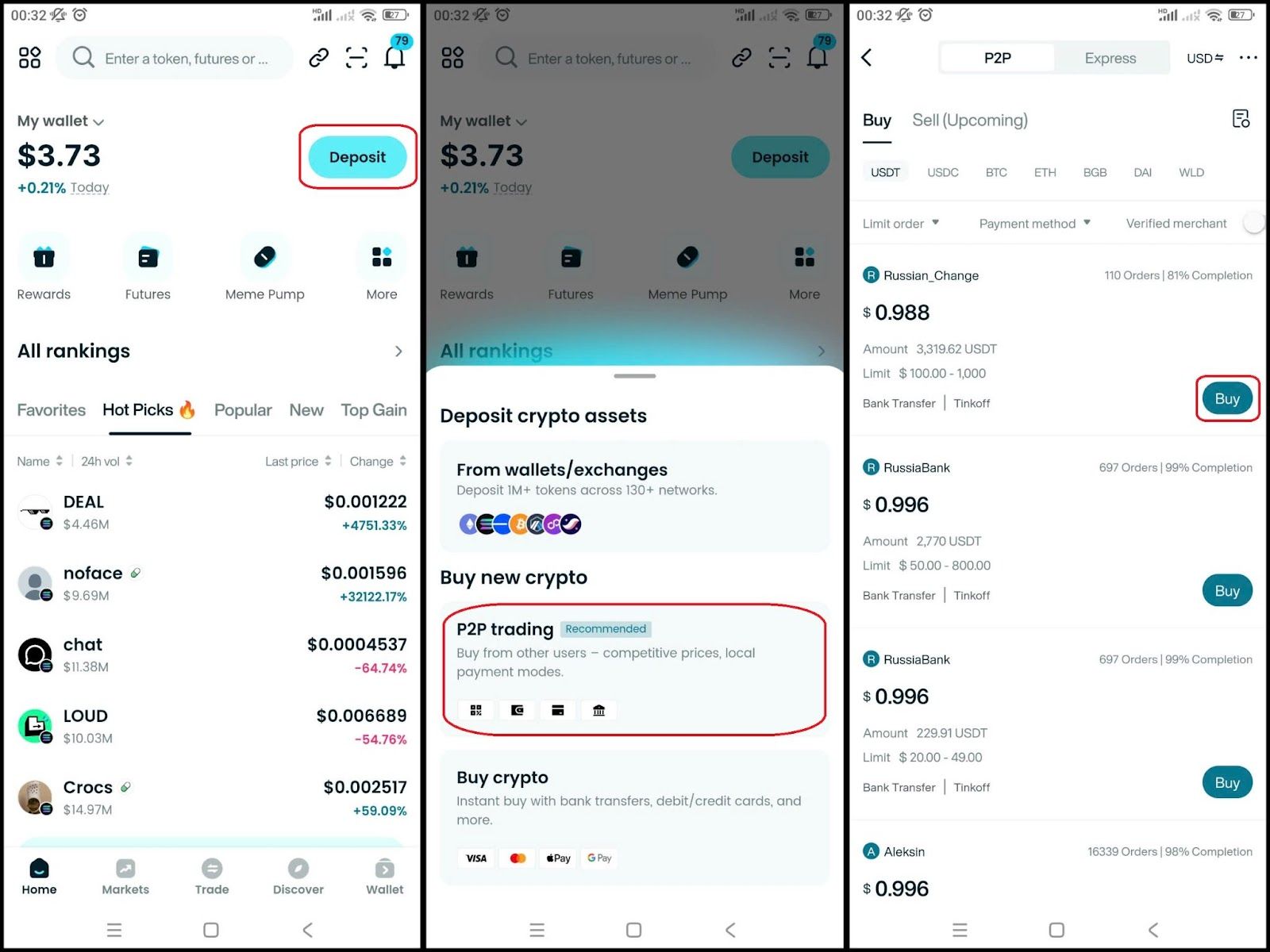
Once you have finished your wallet, you just need to deposit money into it. You can:
- Transfer coins from other wallets: Send BTC, ETH or any coin you have from an external wallet.
- Buy directly with a card: Use a bank card or credit card to buy USDT or ETH right in the app and then exchange it for USDC.
Step 3: Find GeeFi (GEE)
- In the main interface of the wallet, go to Market, type "GEE" in the search bar.
- Select GeeFi (GEE) to see the trading page.
Since this token has not been listed yet, please refer to the final contract address provided by the project team after the token is officially listed.
Step 4: Select the trading pair
Select the pair you want to trade, for example GEE/USDT. So you can use USDT to buy GeeFi (GEE), or vice versa.
Step 5: Place an order
Enter the amount of GeeFi (GEE) you want to buy, check carefully and confirm the order.
Step 6: Check the order
After buying, you can check your GEE in the Wallet section.
Step 7: Withdraw (if needed)
Once you have GeeFi (GEE), if you want to withdraw to another wallet, go to Withdraw, fill in the receiving wallet address, check the blockchain network and the amount carefully, then confirm.
▶Learn more about GeeFi (GEE):
- What is GeeFi (GEE)?
- GeeFi (GEE) Airdrop Guide
- GeeFi (GEE) Listing Date and How to Buy It
- MetaMask vs Bitget Wallet: Which Is Better in 2025?
- Trust Wallet vs Bitget Wallet: Which One Is Better in 2025?
- Phantom vs Bitget Wallet: Which One Is Better?
Conclusion
GeeFi (GEE) positions itself as the core utility layer of a multichain ecosystem that includes a non-custodial wallet, a portfolio management HUB, and an integrated DEX—driven by a strongly marketed presale that sold over 5.3 million tokens on its first day and completed its 10-million token Phase 1 at the price of $0.05. This article has outlined how the presale works, the role of $GEE within the ecosystem, and the key factors that may influence the project’s future—from staking APRs and product roadmap to the inherent risks associated with early-stage presales.
For users looking to join the presale or hold GEE after it lists, Bitget Wallet provides a clear advantage. While it does not directly host presales, Bitget Wallet enables safe and seamless participation through its ability to connect with third-party platforms. With its built-in DApp browser, you can access GeeFi’s official presale page directly without leaving the app or switching wallets. Once the token is listed, Bitget Wallet becomes a high-security all-in-one wallet—supporting multiple chains, fast transactions, smooth swap/bridge functions, and full self-custody. It is an ideal choice for both beginners and advanced traders who want to manage GEE and other assets securely and efficiently.
Download Bitget Wallet now to track GeeFi (GEE), join the presale safely, and be ready to trade the moment the token officially launches.
Sign up Bitget Wallet now - grab your $2 bonus!
FAQs
1. What is GeeFi (GEE)?
GeeFi (GEE) is an ERC-20 utility token powering the GeeFi ecosystem, including its multichain non-custodial wallet, portfolio HUB, and integrated DEX.
2. How does the GeeFi (GEE) presale work?
The presale is structured in multiple phases, starting at $0.05 in Phase 1 and increasing gradually. Users can join through the official GeeFi presale page via DApp-compatible wallets.
3. Where can I buy GEE after the presale?
Once listed, you will be able to buy GEE directly on Bitget Wallet through supported DEX routes or integrated swap functions.
Risk Disclosure
Please be aware that cryptocurrency trading involves high market risk. Bitget Wallet is not responsible for any trading losses incurred. Always perform your own research and trade responsibly.